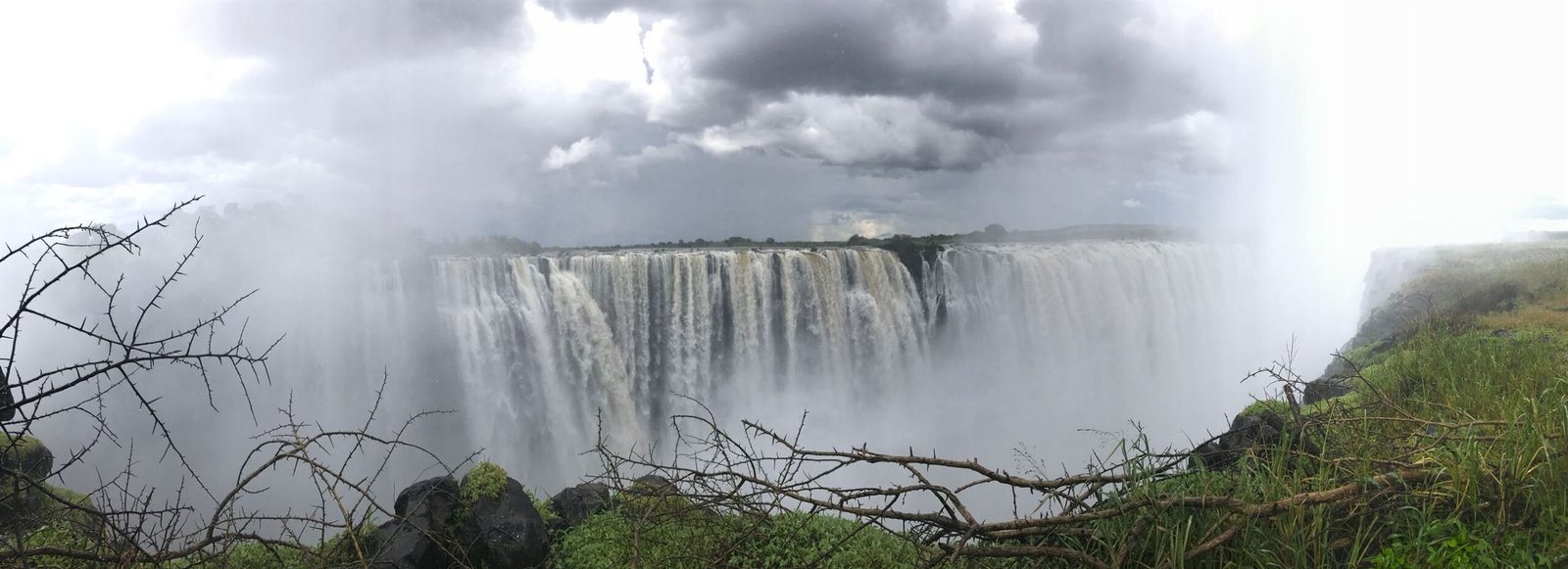

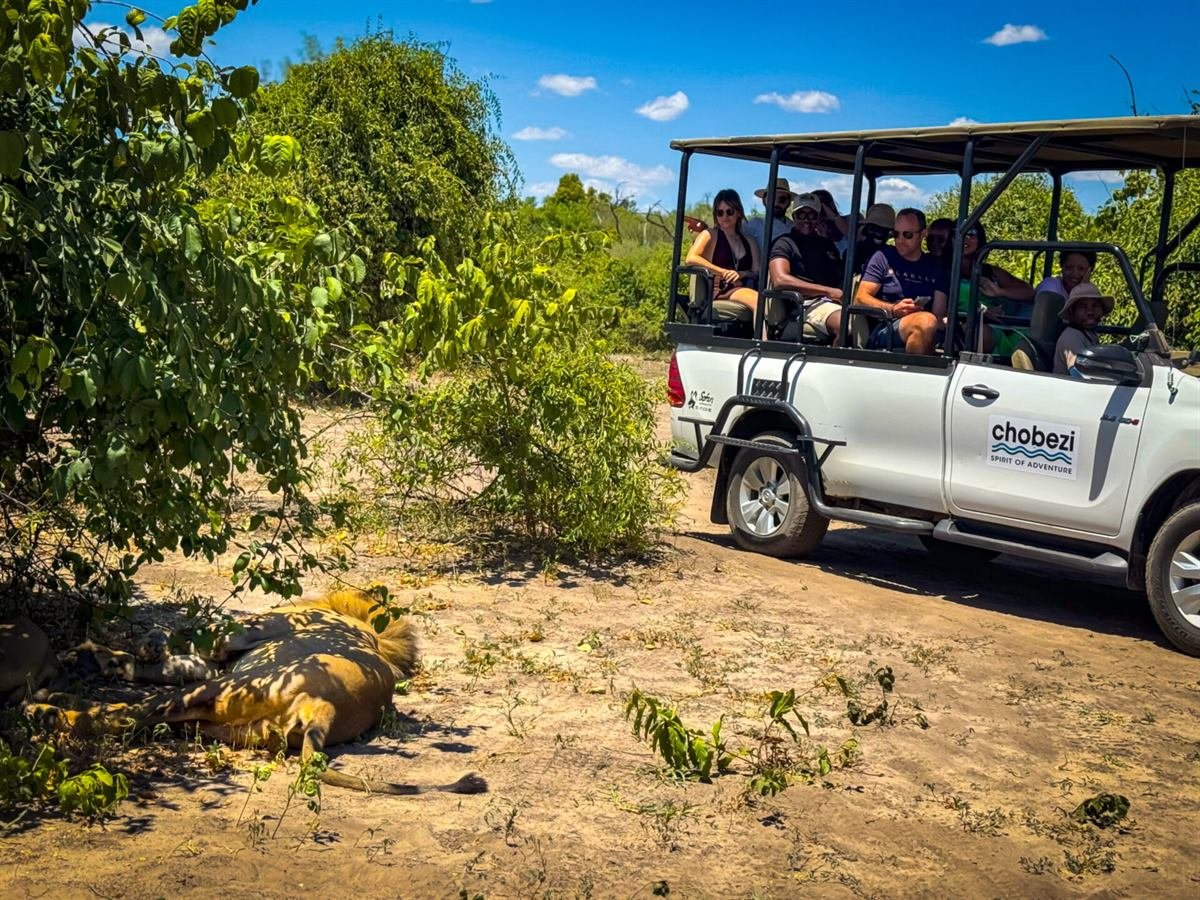
Victoria Falls to the Okavango Delta
The map makes it look like a morning’s drive. The map has never queued at Kazungula.
It is roughly 1,000 km by road from Victoria Falls to Maun, the gateway to the Okavango Delta, and it is a two-day drive done properly. Most people break it at Kasane for Chobe, then run south through Nata to Maun. The faster alternative is to fly: Victoria Falls to Kasane by road, then a light aircraft into the Delta. Which you choose depends on whether the journey is part of the holiday or an obstacle in the middle of it.
What is the actual route?
Three legs, and the first one is short.
- Victoria Falls to Kasane — about 70 km and roughly 1.5 hours including the Kazungula border. This is the same run as the Chobe day trip, so plenty of people do it as a taster before committing to the longer journey.
- Kasane to Nata — about 300 km of good tar through the Chobe forest reserve. Elephant on the road is normal. Fuel at Nata.
- Nata to Maun — about 300 km, again tar, skirting the Makgadikgadi pans.
From Maun you are in the Delta’s gateway, and onward travel is usually by light aircraft or boat rather than road. Botswana Tourism lists Maun and Kasane as the country’s main air access points for exactly this reason.
Done as a single push it is a long, dull day of straight tar. Done over two or three days with Chobe and the pans in the middle, it is one of the better overland runs in southern Africa.
Should you drive it or fly it?
| Option | Best for | Main advantage | Trade-off |
|---|---|---|---|
| Self-drive | Experienced overlanders, longer trips | Freedom, and the pans are worth the road | Cross-border paperwork, 4×4 needed for Delta camps |
| Guided road transfer | Most visitors | Someone else handles both borders | Fixed schedule |
| Road to Kasane, then fly | Short trips, Delta-focused | Saves two days; the flight is spectacular | Strict luggage limits on light aircraft |
If the Delta is the point of the trip and you have a week rather than a fortnight, fly. Light aircraft into the Delta carry soft bags only, usually around 20 kg including hand luggage, and the flight over the waterways is genuinely one of the sights of the region.
If you want the journey itself, our Makgadikgadi and Okavango itinerary runs the pans and the Delta over six nights, and the Best of Botswana trip links Victoria Falls, Chobe and the Delta across eight.
What do the borders actually require?
Kazungula is the crossing between Zimbabwe and Botswana, and since the bridge opened it is considerably faster than the old ferry. Expect passport control both sides, a road access fee and a vehicle permit on the Botswana side, and a drive through a disinfectant trough for foot-and-mouth control — which also means you cannot carry raw meat, and sometimes dairy, across.
If you are self-driving a hire car, the piece people miss is cross-border authorisation from the rental company. You need their written permission letter, the vehicle registration papers and third-party insurance for Botswana. Arrange it when you book, not at the counter, and never at the border.
Many nationalities get a visa on arrival for Botswana, but check yours before travelling. Note that the KAZA UniVisa covers Zimbabwe and Zambia — not Botswana — although it does allow a day trip into Chobe and back without invalidating it.
How long should you give it?
Minimum five nights for the whole thing to be worth doing, and seven to ten is better.
A sensible shape: two nights in Victoria Falls for the waterfall and a Zambezi cruise, two nights in Kasane for Chobe proper rather than the day-trip version, then three nights in the Delta. That gives you the waterfall, the river, the elephant country and the wetland, which are four genuinely different landscapes inside a week.
Trying to compress it into four nights means spending half of them in a vehicle. If that is all the time you have, do Victoria Falls and Chobe properly with the four-night Chobe combination and leave the Delta for a trip that can do it justice. Our Botswana page lays out the options.
Route questions, answered
How far is Victoria Falls from the Okavango Delta?
About 1,000 km by road to Maun, the Delta’s gateway town, usually broken into two or three days via Kasane and Nata. The alternative is a short road transfer to Kasane followed by a light aircraft flight into the Delta, which saves roughly two days.
Can you drive from Victoria Falls to Maun?
Yes, and the route is tar the whole way via Kasane and Nata. It is a long drive best split over two days. A 4×4 is not needed for the main road but is usually required for tracks into the Delta camps themselves.
What do I need to cross the border from Zimbabwe into Botswana?
A passport and the appropriate visa, plus a road access fee and vehicle permit on the Botswana side. If you are driving a hire car you also need written cross-border authorisation from the rental company, the vehicle papers and third-party insurance for Botswana, all arranged in advance. Raw meat and sometimes dairy cannot be carried across.
Does the KAZA UniVisa cover Botswana?
No. The KAZA UniVisa covers Zimbabwe and Zambia for 30 days. It does permit a day trip into Chobe in Botswana and back without invalidating the visa, but it is not a Botswana visa.
How many nights do I need for Victoria Falls and the Okavango Delta?
Seven to ten nights to do both properly. A workable shape is two nights at Victoria Falls, two at Kasane for Chobe and three in the Delta. In under five nights you spend most of the trip travelling, and it is usually better to pair Victoria Falls with Chobe alone.
Victoria Falls, Chobe and the Delta in one trip
We run this route as a guided itinerary with both borders, the transfers and the light aircraft legs arranged.