
What to pack for Victoria Falls
Pack for a waterfall, a game drive and a hot afternoon on the same day. It is less complicated than it sounds.
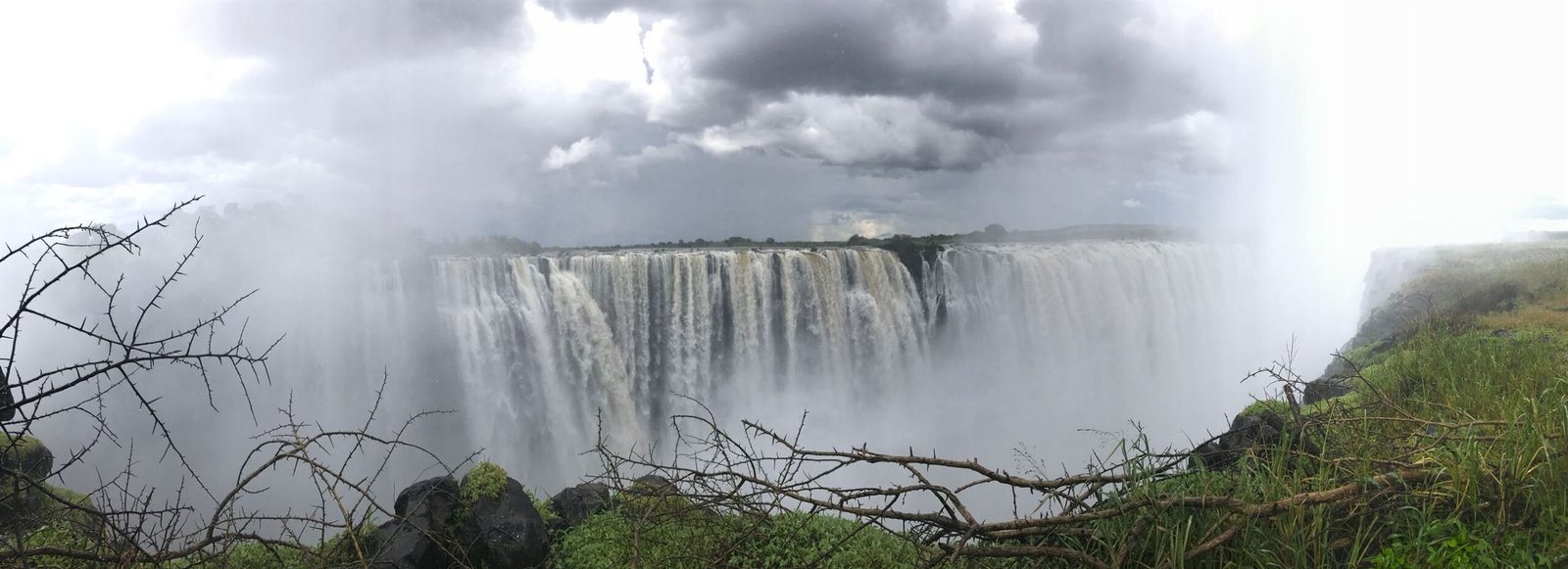
Quick-drying layers, closed walking shoes, a proper rain jacket, high-factor sun cream, insect repellent and a dry bag for your phone. That covers 90% of a Victoria Falls trip. The one item people regret leaving behind is the rain jacket — the rainforest beside the falls is watered by spray all year, so the path is wet even on a cloudless day in October.
What do you actually need for the falls themselves?
A rain jacket, shoes with grip, and something waterproof for your phone. The guided tour of the falls walks a paved rainforest path past sixteen viewpoints, and in high water the spray comes down like heavy rain for most of it.
- Rain jacket or poncho. Ponchos are sold at the gate, but they are thin and they flap. A light packable jacket is better and you will use it on the boat too.
- Closed shoes with grip. The path is wet rock and worn paving. Flip-flops are how people end up on the ground.
- A dry bag or a zip-lock. Phones die in the spray every single day here.
- Quick-drying clothes. Cotton stays wet for hours. Anything synthetic is dry by lunch.
- A microfibre towel. Small, cheap, and the thing you will be smug about.
In the low-water months, September to December, you can usually walk the whole path in a t-shirt and stay dry — which is its own trade-off, because less spray means less water. Our weather guide sets out what each month does.
What should you wear on a safari day?
Neutral colours, long sleeves and a warm layer you can take off by nine in the morning. On a Chobe day trip or a Hwange safari you leave before sunrise in an open vehicle, and a winter morning here can start near freezing before reaching the mid-twenties by lunch.
Khaki, olive, grey and brown are the convention. Avoid bright white, which shows every speck of dust, and dark navy and black, which attract tsetse fly in some areas. Camouflage patterns are a genuine problem: they are restricted clothing for civilians in Zimbabwe and Zambia, so leave them at home.
A brimmed hat, polarised sunglasses and binoculars are the three things guests most often wish they had brought. Most vehicles have a spare pair of binoculars. Not every vehicle does.
What about the adrenalin activities?
Less than you would think — operators supply the technical kit. For white water rafting you want secure sandals or old trainers you do not mind soaking, swimwear under quick-drying shorts, and absolutely nothing you would hate to lose in the Zambezi. Sunglasses need a strap or they are gone on the first rapid.
For the bungee, the gorge swing and the zip line, wear shorts or trousers rather than a skirt, closed shoes, and empty your pockets properly. Everything you take over the edge is yours to retrieve from the Batoka Gorge, which is to say it is not.
Contact lens wearers: bring spares. Between the rafting and the spray, Victoria Falls eats contact lenses.
The practical bits people forget
- US dollars in small notes. Zimbabwe runs on cash US dollars and change is often short. Bring fives, tens and twenties, and nothing printed before 2013 — older notes are frequently refused.
- A power adapter. Zimbabwe and Zambia both use the UK three-pin Type G plug, 230V.
- Insect repellent with DEET. Victoria Falls is low-risk but not zero-risk for malaria, and the risk rises in the wet months. Ask a travel clinic about prophylaxis for your dates.
- A copy of your passport, kept separately from the passport.
- Any medication you take, in its original box. Pharmacies here are decent but not comprehensive.
What you do not need: a sleeping bag, a mosquito net, water-purification tablets or a first aid kit beyond plasters and painkillers. Every lodge on our accommodation list has beds, nets where they are needed, and safe drinking water.
Packing questions, answered
Do I need a raincoat for Victoria Falls?
Yes, in almost any month. The rainforest beside the falls is watered by spray from the waterfall itself, so the path is wet even on a dry sunny day. In high water from February to May you will be thoroughly soaked without one.
What shoes should I wear at Victoria Falls?
Closed shoes with grip. The rainforest path is wet rock and worn paving and it is genuinely slippery. Trainers or walking shoes are ideal. Keep sandals for the lodge.
What colours should I wear on safari near Victoria Falls?
Neutrals: khaki, olive, grey and brown. Avoid bright white, which shows dust, and dark blue and black, which can attract tsetse fly. Camouflage clothing is restricted for civilians in both Zimbabwe and Zambia, so do not pack it.
What money should I bring to Victoria Falls?
US dollars in small denominations. Zimbabwe runs largely on cash US dollars and change is often short, so fives and tens are more useful than fifties. Notes printed before 2013 are frequently refused. Cards are accepted at most lodges and larger operators.
Is it cold in Victoria Falls?
In the middle of the day, almost never. Winter mornings from June to August are a different matter and can start close to freezing in an open game-drive vehicle before reaching the mid-twenties by lunchtime, so pack a layer you can take off.
Everything else, we carry for you
Transfers, park fees, the guide, the boat and the bed. You bring the rain jacket.