
Victoria Falls safari: what animals will you actually see?
Nobody can promise you a leopard. Everybody who does is selling something.
Elephant, hippo, crocodile, buffalo, impala, giraffe, zebra, baboon and warthog are all near-certain on a full-day safari from Victoria Falls in the dry season. Lion is a realistic maybe, perhaps one trip in three. Leopard, wild dog and rhino are genuine luck rather than an itinerary item. Which park you choose matters more than anything else: Chobe for elephant and river wildlife, Hwange for big herds and predators.
Where do you actually go on safari from Victoria Falls?
Three realistic options, and they give noticeably different animals.
| Where | Time from town | Best for | Trade-off |
|---|---|---|---|
| Chobe, Botswana | About 1.5 hrs + border | Elephant in huge numbers, hippo, croc, birds, river views | A border crossing each way |
| Hwange, Zimbabwe | About 2 hrs | Big herds, lion, the widest species list | Long day, no river |
| Zambezi National Park | About 10 minutes | A half day, no border, genuinely close to town | Smaller park, fewer predators |
Chobe is the one most visitors do, and the reason is the river. The afternoon boat cruise puts you at eye level with elephant crossing to the islands, hippo pods and crocodiles on the sandbanks, which is a different and often better experience than the game drive that comes with it. Our Chobe river cruise post covers that day in detail.
If you only have a morning, the Zambezi National Park sits five minutes from the edge of town and needs no border crossing at all.
What will you almost certainly see?
In the dry season, on a full day out, the following are close to guaranteed:
- Elephant. Botswana holds the largest elephant population in Africa and Chobe is its heartland. In September and October the herds come to the river in their hundreds.
- Hippo and crocodile. Any boat cruise, including the Zambezi sunset cruise from town.
- Buffalo, impala, kudu, waterbuck, baboon, warthog. The everyday cast.
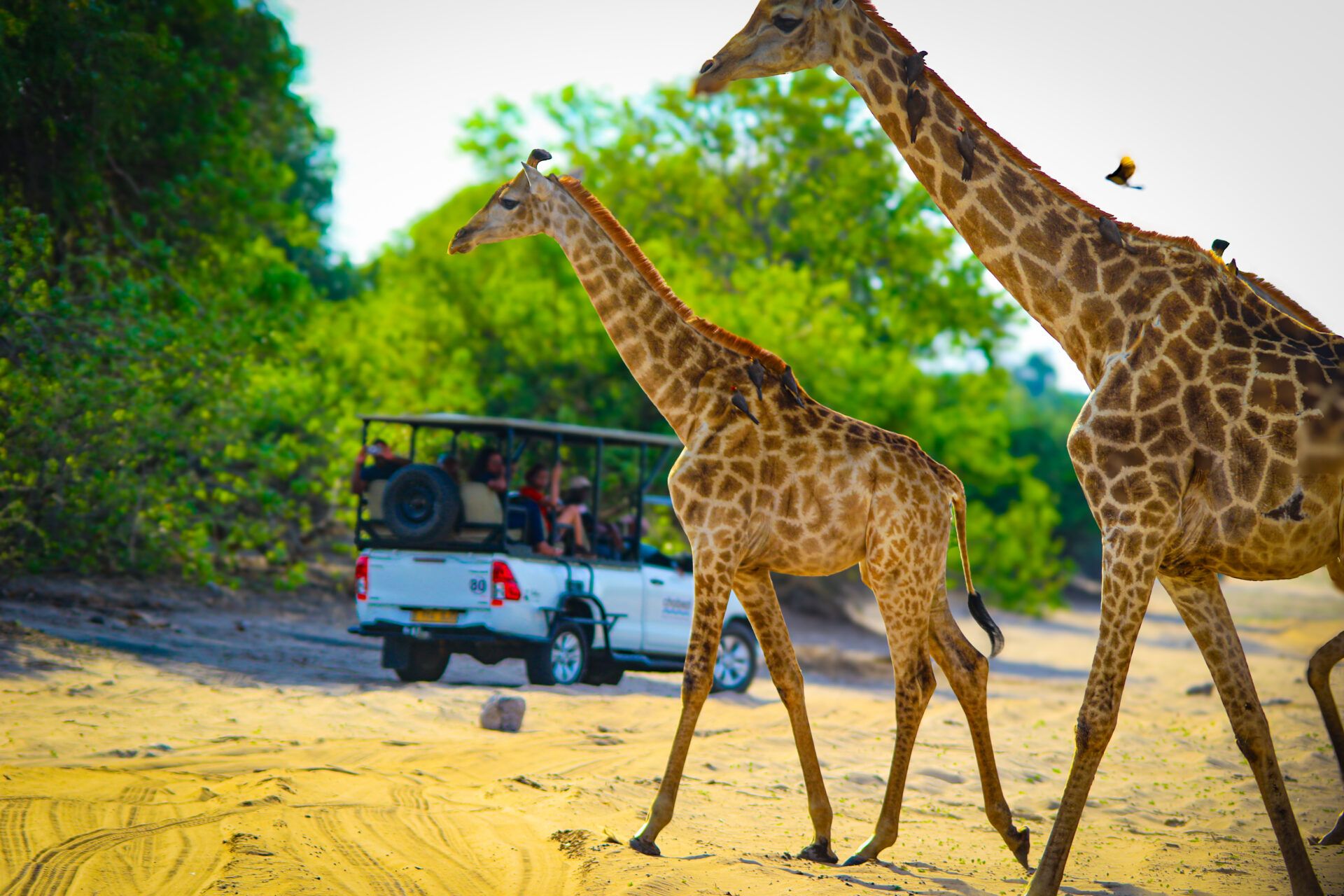
- Giraffe and zebra. Reliable in Hwange, common in Chobe.
- Birds. Fish eagle, bee-eaters, rollers, hornbills. Over 400 species in the region, and the one category that never disappoints.
Even without leaving town, vervet monkeys and warthog wander the hotel lawns, and elephant regularly cross the main road at dusk. The Zimbabwe Parks and Wildlife Management Authority manages the national parks either side of the town, and the boundary between “park” and “town” is more of a suggestion than a fence.
What are your odds on the big cats?
Lower than the brochures imply, and we would rather tell you now.
Lion: a realistic possibility in Hwange, perhaps one day trip in three in the dry season. Much less likely in Chobe on a day visit, and rare in the Zambezi National Park.
Leopard: genuinely uncommon on a day trip. They are nocturnal, solitary and superbly hidden. People do see them. Do not build your trip around it.
Wild dog and cheetah: Hwange has both, and both are scarce. A sighting is the kind of thing guides radio each other about.
Rhino: not in Chobe or Hwange in any reliable way. If rhino matter to you, that is a different trip — say so and we will point you at the Matobo Hills, where tracking white rhino on foot is the actual attraction.
The single biggest factor in your odds is not luck but nights. A day trip gives you one morning and one afternoon. A multi-night safari gives you six or eight game drives, including the dawn and dusk windows when predators actually move.
Does the month change what you see?
Substantially. The dry season from roughly July to October is the best game viewing of the year: the bush thins out, the seasonal pans dry up, and animals are forced to concentrate at the few permanent water sources. In Hwange that means the pumped waterholes; in Chobe it means the river. You see more because the animals have fewer places to be.
The wet season from December to March reverses it. Water is everywhere, so animals disperse, and the grass grows high enough to hide a lot of them. What you get instead is newborn impala, migrant birds in breeding plumage, and dramatic skies — genuinely better for photography, genuinely worse for a species count.
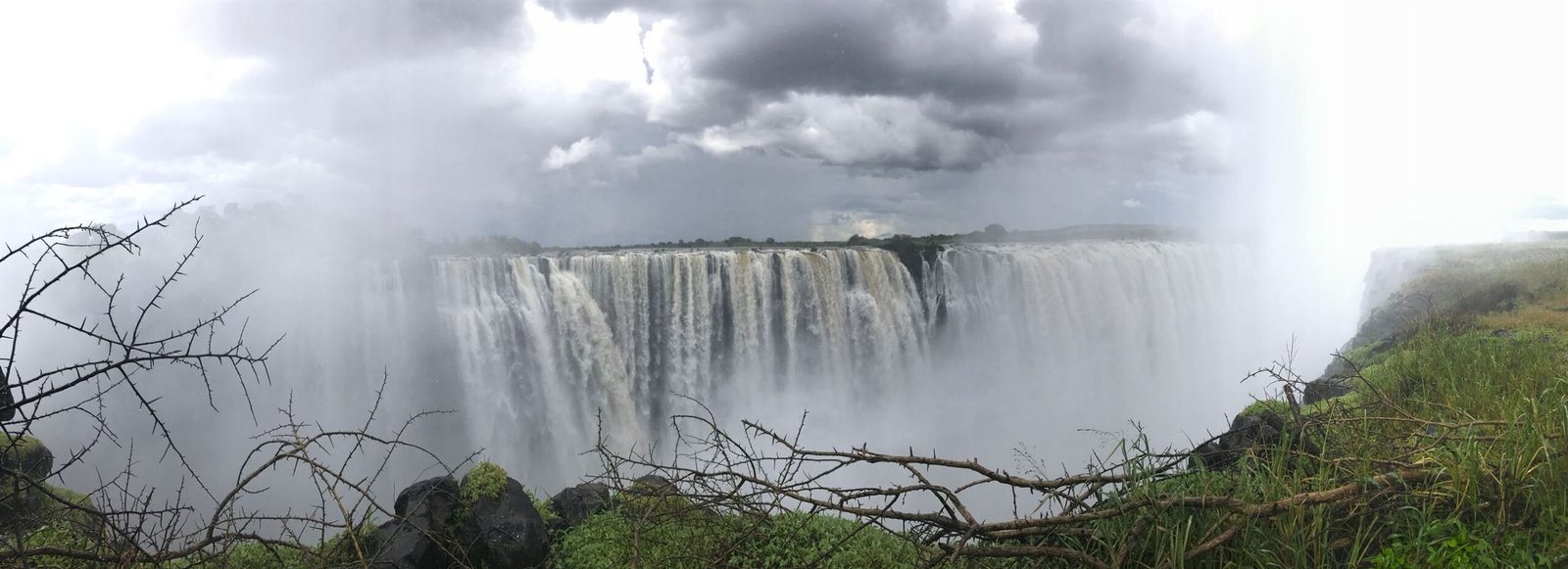
Our month-by-month guide sets out the whole cycle, and the months to avoid post covers the trade-offs if the waterfall also matters to you.
Safari questions, answered
What animals will I see on safari from Victoria Falls?
On a full-day safari in the dry season you can expect elephant, hippo, crocodile, buffalo, giraffe, zebra, impala, kudu, baboon and warthog, plus a very wide range of birds. Lion is possible but not reliable, and leopard, wild dog, cheetah and rhino are genuine luck.
Can you see the Big Five at Victoria Falls?
Not in one place. Elephant, buffalo and lion are all realistic in Hwange. Leopard is uncommon on a day trip, and rhino are not reliably found in either Hwange or Chobe. Seeing all five needs a longer itinerary that includes a rhino area such as the Matobo Hills.
Is Chobe or Hwange better for a day trip?
Chobe for elephant, hippo, crocodile and the river, with an afternoon boat cruise that many visitors rate as the highlight. Hwange for big herds, a wider species list and the better chance of lion. Chobe involves a border crossing into Botswana; Hwange does not.
When is the best time for a safari from Victoria Falls?
July to October. The bush thins, seasonal water dries up and animals concentrate at the river and the waterholes, so you see considerably more. October is the most productive and also the hottest month of the year.
Can I see animals without leaving Victoria Falls town?
Yes. Vervet monkeys, baboons and warthog are common on hotel lawns, and elephant regularly cross the main roads around dusk. The Zambezi National Park gate is about ten minutes from the centre of town if you want a proper game drive without a long transfer.
Pick the park that matches what you want to see
Chobe for elephant and the river, Hwange for the herds and the cats. We book both, with transfers and park fees handled.