
The moonbow: Victoria Falls by full moon
Same physics as a rainbow, one twenty-thousandth of the light, and a waterfall generous enough to supply its own weather.
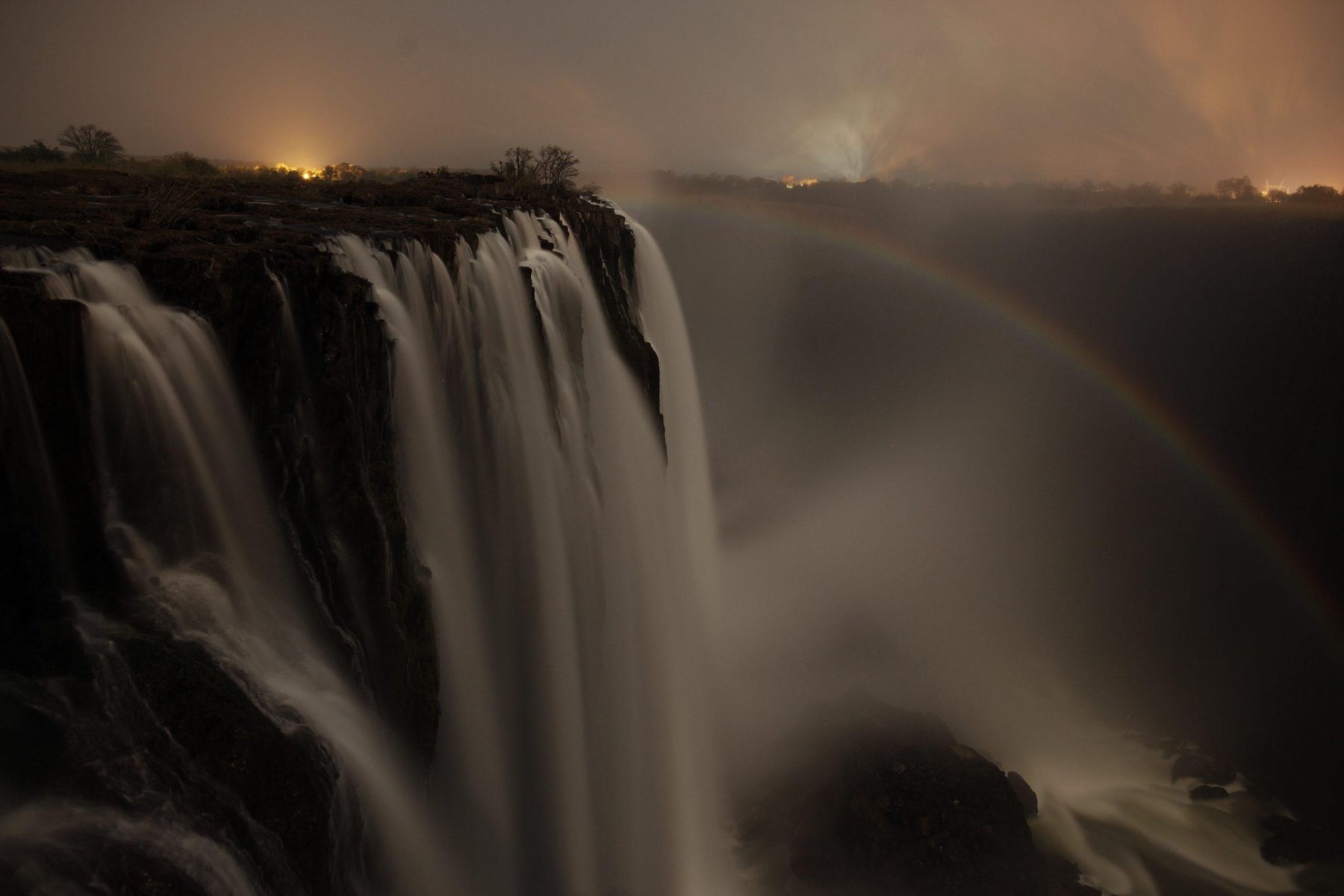
A moonbow, or lunar rainbow, is a rainbow made by moonlight instead of sunlight. At Victoria Falls it appears in the spray on the nights around a full moon, when the moon is bright and low. You need strong spray, so the high-water months give the best chance, and the national park arranges special night viewing on those nights, with park entry at US$116 per person.
What is a moonbow?
Exactly what a rainbow is: light refracted and reflected through water droplets, bent into its colours, thrown back at you. The only difference is the light source. Moonlight is roughly 400,000 times fainter than sunlight, so your eyes mostly read a moonbow as a pale silver-white arc. Cameras, with a long exposure, see the colours you cannot.
Which makes this the rare activity where the photograph is better than the view, and the one time we will tell you to bring a tripod rather than tell you to put the phone down.
Why Victoria Falls is one of the best places on earth to see one
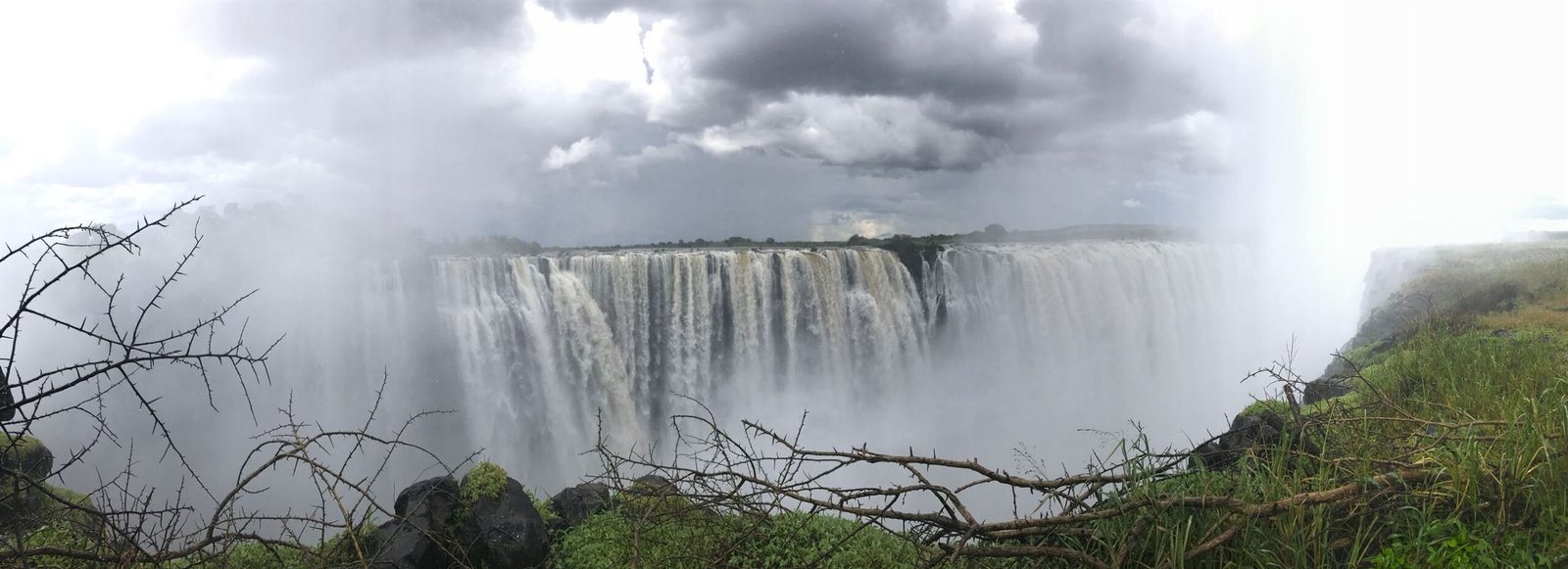
Moonbows need constant spray, and most waterfalls do not make enough. Victoria Falls, at full flood, throws a plume over 400 metres into the air that can be seen from 50 kilometres away. That is an enormous, permanently renewed screen of droplets sitting exactly where the moon can light it.
Add a clear, dry sky and a bright low moon and the conditions line up a few nights each month. Not every month, and not on demand — this is weather, not a scheduled show.
When can you see the moonbow?
On the nights around full moon, usually the night before, the night of and the night after. You also need spray, which means the higher-water months are far more reliable than the end of the dry season, when the Zambian face can run nearly dry.
The sweet spot is a full moon in the months when the river is high and the sky is clear — broadly the back half of the wet season into the early dry season. Our month-by-month water guide explains what the river is doing when.
Park entry for the night viewing is US$116 per person, excluding transfers from your hotel. For 2028 the provisional peak-season windows are 8–10 April, 7–9 May, 6–8 June and 5–7 July; every month’s dates are on our Victoria Falls moonbow tour page.
The dates are calculated from the full-moon calendar, not a confirmed park schedule, and the fee is set by the park authority. Ask us to confirm both against your travel window before you commit to a date.
What is it actually like?
Quiet, wet and strange. The rainforest at night sounds different, the falls are louder when you cannot see them properly, and the arc appears and fades as the spray shifts. People go in expecting a spectacle and come out describing something closer to a mood.
Dress for rain, because you are standing in permanent drizzle in the dark. Bring a torch for the path and a cloth for your lens, which will fog within seconds of arriving.
Build the rest of the trip around it
If you are timing a visit to the full moon, the daylight hours still need filling. A guided tour of the falls in the morning (US$32 plus US$58 entry) means you know the paths before you walk them at night, and a sunset cruise at US$52 puts you on the river as the moon comes up.
High water also means spray hides the Main Falls from the ground, so this is the trip where a helicopter flight earns its US$173 twice over.
Moonbow FAQs
What is a moonbow at Victoria Falls?
A rainbow produced by moonlight rather than sunlight, appearing in the spray of the falls on the nights around a full moon. It usually looks silver-white to the eye, with the colours visible in long-exposure photographs.
When can you see a lunar rainbow at Victoria Falls?
On the nights around full moon, typically the night before, the night of and the night after, when the moon is bright and the sky is clear. Strong spray is needed, so higher-water months are much more reliable.
Is the national park open at night for the moonbow?
The park arranges special night viewing on full moon nights. Park entry is US$116 per person, excluding transfers. Arrangements and fees are set by the park authority and can change, so confirm the current arrangement before fixing dates.
What should I bring to see the moonbow?
Rain protection, a torch for the path, a cloth for your camera lens and, if you want photographs, a tripod. The spray means you will get wet even on a clear night.
Can you photograph a moonbow?
Yes, and the photograph usually shows more colour than your eye does. A long exposure on a tripod is the standard approach.
Is a moonbow guaranteed on a full moon?
No. It needs spray, a clear sky and the right moon angle at once. Treat it as a bonus on a trip planned around the falls rather than the single reason for the trip.
Plan a trip around the full moon
Tell us the month and we will line up the moon dates, the water levels and the park’s current night arrangement before you book flights.