

Victoria Falls weather, month by month
The falls have two moods and twelve months to show them in. Here is what the water, the weather and the activity list are doing when you arrive.
Victoria Falls weather is warm and dry from May to October and hot and wet from November to April. Water peaks in April, when spray rises over 400 metres and hides much of the view, and runs lowest from September to December, when the Zambian face can be nearly dry. June to August is the best all-round window.
What is the weather actually like at Victoria Falls?
Two seasons, and they behave themselves. The dry season runs roughly May to October: warm days, cool mornings, almost no rain and dust on everything you own. The wet season runs November to April: hot, humid, big afternoon thunderstorms that arrive like a slammed door and leave twenty minutes later.
What changes your trip is not the weather, though. It is the river. The Zambezi takes months to deliver the rain that fell upstream, so the falls are at their fullest well after the rains stop — and at their emptiest at the end of the dry season. Plan around the water and the weather sorts itself out.
When is the water highest at Victoria Falls?
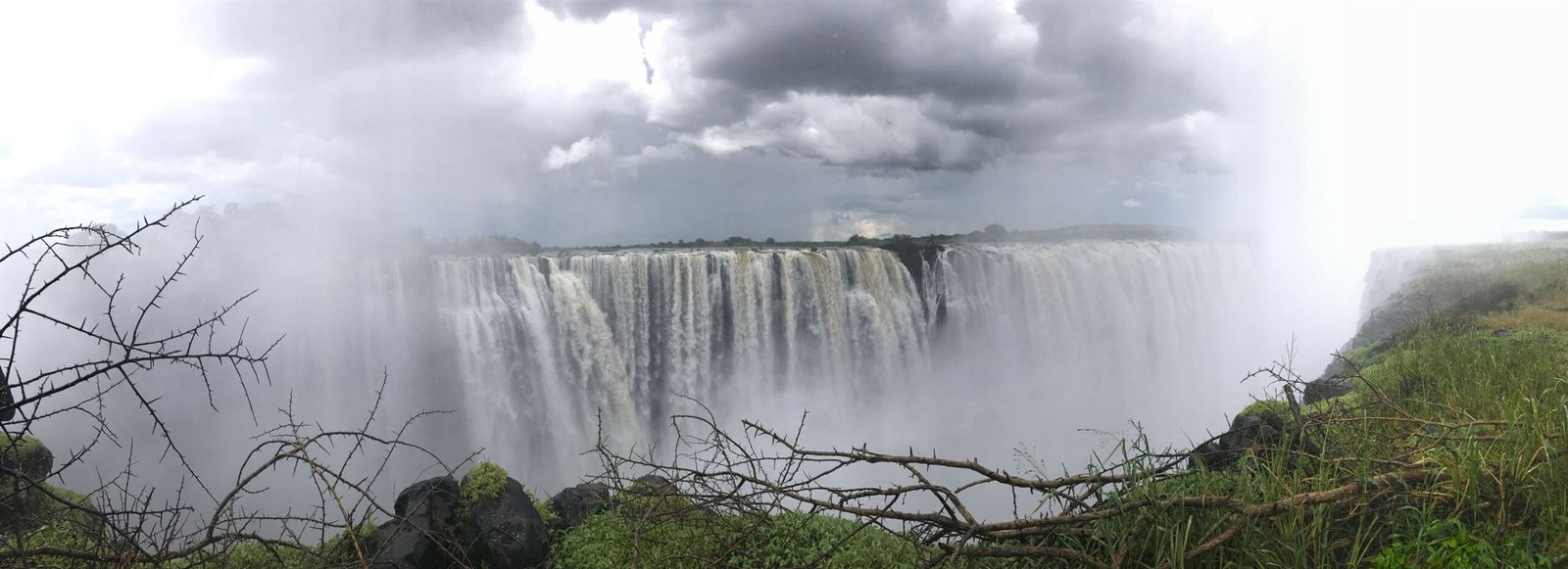
April is the peak. The Zambezi is at its highest after the December to March rains, the spray plume climbs over 400 metres and can be seen from 50 kilometres away, and the sound carries a long way before you ever see the water.
There is a catch, and it is a big wet one: at full flood the spray obscures much of the Main Falls from the ground viewpoints. You will get soaked, you will love it, and your photographs will mostly be of a white wall. This is the month when the helicopter flight stops being a luxury and starts being the only way to see the shape of the thing. The Flight of Angels is from US$173 per person plus the US$29 levy.
When is the water lowest, and does that ruin it?
September to December is low water. The Zambian face can run almost dry in those months, which sounds like a disaster and is actually an opportunity: the gorge structure is fully visible, the rock architecture that the flood hides is suddenly the main event, and two experiences only exist now.
The first is Devil’s Pool on Livingstone Island, open roughly mid August to January, from US$123 per person with breakfast plus US$26 park fees. The second is low-water rafting, generally August to December, when the rapids are at their most technical — from US$173 per person plus US$12 fees.
Zimbabwe, meanwhile, keeps a curtain of water year-round across its 75 percent of the frontage, which is why the guided tour on the Zimbabwe side works in every month of the year.
Month by month: what to expect
- January to March. Hot, green, wet. Thunderstorms most afternoons, fewest visitors, best rates. The river is rising.
- April. Peak flood. Enormous noise, enormous spray, enormous raincoat. Fly over it.
- May. Still very full, rain finished, air clearing. A quietly excellent month.
- June to August. The all-rounder: strong flow, reduced spray, cool mornings, good game viewing as the bush dries out. Also peak season, so book early.
- September and October. Hot and dry, clearest views, best game viewing of the year, Devil’s Pool open, rafting at its most intense. October is the hottest month — locals call it suicide month, affectionately.
- November and December. First rains, dramatic skies, the bush goes green in about a week. Low water still, so the gorge is visible.
So when should you actually go?
If you want the falls at their most overwhelming, come in April and accept that you will see them best from the air. If you want one trip that does everything reasonably well, come between June and August. If wildlife and the adrenaline activities matter more than peak water, come in September or October.
Whichever you pick, the activity price list stays the same all year — it is availability, not price, that gets tight in peak season. Our two to four night packages bundle the transfers, the falls tour and the cruise so you are not booking six things separately.
Victoria Falls weather questions
What is the best month to visit Victoria Falls?
June to August is the best all-round window: strong water flow, reduced spray, cool mornings and good game viewing. April gives you peak volume, and August to November gives the clearest views plus Devil’s Pool and low-water rafting.
Which month has the most water at Victoria Falls?
April is typically the peak, with the Zambezi at its highest after the December to March rains. At full flood the spray plume rises over 400 metres and can be seen from 50 kilometres away, but it also obscures much of the Main Falls from the ground viewpoints.
Does Victoria Falls dry up?
The Zimbabwe side keeps a curtain of water year-round. The Zambian face can run almost dry between September and December, which is when Devil’s Pool opens and the gorge structure is fully visible.
When does it rain at Victoria Falls?
The wet season runs from November to April, usually as short, heavy afternoon thunderstorms rather than all-day rain. May to October is dry.
Is Victoria Falls too hot in October?
October is the hottest month of the year and is dry, so plan activities for the early morning and late afternoon. It is also the best month of the year for game viewing, because animals concentrate at the remaining water.
Do I need a raincoat at Victoria Falls?
In high water, yes. Raincoats are provided on the guided tour of the falls in the high-water months, and you will still get wet. In low water a hat is more useful than a raincoat.
Tell us your month and we will build the trip around it
Same falls, very different trips depending on when you arrive. Send your dates and we will tell you honestly what the water will be doing.